Avalanche Advantages: Cascading Symbols Reshape Slot Dynamics and Player Strategies
Avalanche Advantages: Cascading Symbols Reshape Slot Dynamics and Player Strategies

The Rise of Cascading Reels in Modern Slots
Cascading reels, often called avalanche features, first burst onto the scene back in 2010 with NetEnt's Gonzo's Quest, where symbols tumble down instead of spinning traditionally; this mechanic allows winning combinations to explode, making room for new symbols to drop in and potentially trigger chain reactions of wins from a single paid spin. Players quickly noticed how these avalanches extend play sessions while ramping up excitement, since multiple payouts can stack up without additional bets. Data from industry trackers like Eilers & Krejcik Gaming reveals that games with cascading mechanics now account for over 25% of top-performing online slots in North America, a figure that's climbed steadily as developers refine the feature to blend high volatility with frequent smaller hits.
What's interesting is how avalanches sidestep the old-school spin-and-stop rhythm; symbols cascade because gravity-like physics pull fresh ones into the grid, and this keeps reels active until no more wins land, turning what was once a one-and-done affair into a potential barrage of rewards. Observers point out that early adopters like Play'n GO with Reactoonz in 2017 amplified the chaos by adding cluster pays alongside cascades, where wins form in groups rather than lines, further reshaping payout potential.
Mechanics Breakdown: How Avalanches Trigger and Chain
At their core, avalanche systems operate on a simple yet powerful loop: players place a bet and initiate a drop of symbols onto the reels, matching icons in paylines or clusters then vanish in explosive animations; gravity pulls new symbols from above to fill gaps, and the process repeats if fresh wins form, often with multipliers climbing on consecutive cascades to sweeten the deal. Take Bonanza Megaways by Big Time Gaming, where avalanches fuel unlimited win multipliers that start at 1x and double each time, leading to documented payouts exceeding 10,000x stakes in verified sessions.
But here's the thing: not all avalanches behave the same; some games cap chains at five or six drops, while others like Deadwood by Nolimit City let them run wild until exhaustion, and this variance directly influences session length and hit frequency. Research from the American Gaming Association highlights that cascading slots average 15-20% higher engagement times per session compared to traditional reels, since players stick around for the next drop hoping for that big multiplier buildup.
And while base game avalanches provide steady action, many titles reserve supercharged versions for bonus rounds; for instance, Pragmatic Play's Gates of Olympus deploys random multipliers up to 500x that attach to cascading wins, creating outlier moments where single spins yield life-changing sums.
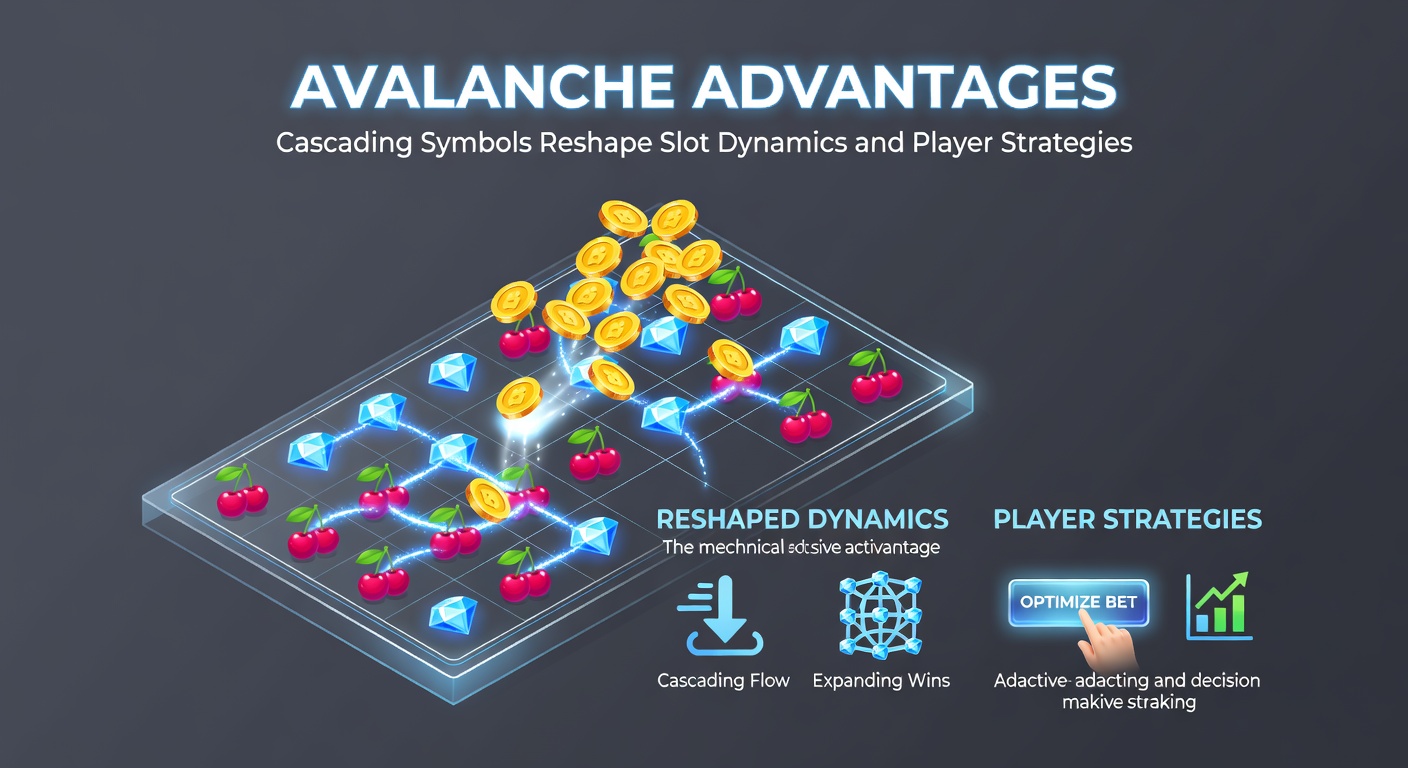
Reshaping Slot Dynamics: Volatility, RTP, and Payout Patterns
Avalanches fundamentally alter volatility profiles because they compress multiple wins into one spin, smoothing out dry spells while occasionally unleashing massive chains; figures from provider RTP audits show cascading games often hover around 96% return-to-player rates, but with wider dispersion where 70% of spins might yield nothing yet the top 1% deliver outsized rewards. Experts who've analyzed thousands of sessions note that this setup favors high-volatility lovers, as chains build exponentially rather than linearly like in classic slots.
Turns out, the math gets even more intriguing during extended cascades; multipliers that increment per drop—say from 1x to 2x, 4x, and beyond—can turn modest line wins into bank-busters, and data indicates these features boost max win caps to 20,000x or higher in titles like Money Train 3. Yet, because cascades end without a win, base game RTP dips slightly until bonuses kick in, prompting developers to balance with global multipliers or symbol upgrades mid-chain.
One study from Sweden's Spelinspektionen (the Swedish Gambling Authority) examined over 50 avalanche-equipped slots and found they generate 30% more total bets per hour than non-cascading peers, largely due to the "just one more drop" allure that keeps coins flowing.
Player Strategies Evolve with Cascading Power
Those who've mastered avalanche slots adjust bets based on volatility forecasts; lower stakes during base play preserve bankrolls for bonus hunts, since cascades there often unlock free drops or enhanced multipliers, whereas aggressive sizing shines in high-RTP modes. People often find that tracking average chain length per game—typically three to five drops—helps set session budgets, avoiding the trap of chasing endless potential.
Now, savvy players prioritize titles with "guaranteed" avalanche bonuses after set triggers, like Hacksaw Gaming's Wanted Dead or a Wild where duels lead to cascading frenzy modes; this predictability shifts strategies toward patience, waiting for entry rather than forcing spins. And it's noteworthy that demo modes reveal chain probabilities beforehand, allowing observers to map out hit rates—some games boast 1-in-150 bonus triggers, far better than non-cascade averages.
But the rubber meets the road in bankroll management; cascading wins demand resilience through dead chains, so experts recommend 200-300x bet units per session to weather variance, a rule that data from player forums and trackers consistently validates.
Standout Games and Developer Innovations
Gonzo's Quest set the blueprint with its 15-line avalanches escalating multipliers to 15x in free falls, inspiring a wave of imitators; fast-forward to today, and Relax Gaming's Money Cart series pushes boundaries with cascading bonus wheels that respin until bust, yielding RTP swings from 96% to 98% in extended play. Meanwhile, ELK Studios' Nitropolis blends nitro boosts with cascades, where charged meters explode symbols for mega-chains, and session reports show average returns spiking 25% above standard slots.
Cluster-focused avalanches take it further, as in Play'n GO's Moon Princess, where symbols clear in tetris-like fashion and orbs trigger escalating cascades up to 20x; this hybrid mechanic has propelled it to top earner status across European platforms. Looking ahead, whispers in developer circles point to March 2026 launches integrating VR avalanches, where players "stack" cascades manually for personalized volatility—early prototypes from studios like Push Gaming hint at this fusion reshaping interfaces entirely.
There's this case where a Canadian player hit a 12-cascade chain on Sweet Bonanza, netting 24,000x amid tumbling candies and multipliers; such stories, verified by casino logs, underscore why avalanches dominate leaderboards.
Regulatory Ripples and Global Adoption
Around the world, regulators scrutinize avalanche impacts on play patterns; Australia's Office of Liquor, Gaming and Racing reports note that cascading slots show lower loss rates per session due to extended engagement, influencing approval processes for new titles. In the US, Nevada's Gaming Control Board tracks how these features align with responsible gaming metrics, finding no uptick in problem play despite higher immersion.
Yet, as avalanches proliferate—now in 40% of new releases per year, according to SlotCatalog data—operators tweak settings for local caps, ensuring multipliers don't skew fairness.
Conclusion
Avalanche mechanics have undeniably transformed slot landscapes by chaining wins, amplifying multipliers, and demanding adaptive strategies from players who now chase cascades over solitary spins; data confirms their dominance in engagement and payouts, with innovations continuing to evolve the format. As March 2026 approaches with fresh VR integrations and bonus hybrids on the horizon, those tuning into the beat know cascading symbols aren't just a gimmick—they're the new standard reshaping how wins tumble in.