Examining Cluster Symbol Dynamics in Current Online Slot Offerings and Resulting Statistical Distributions
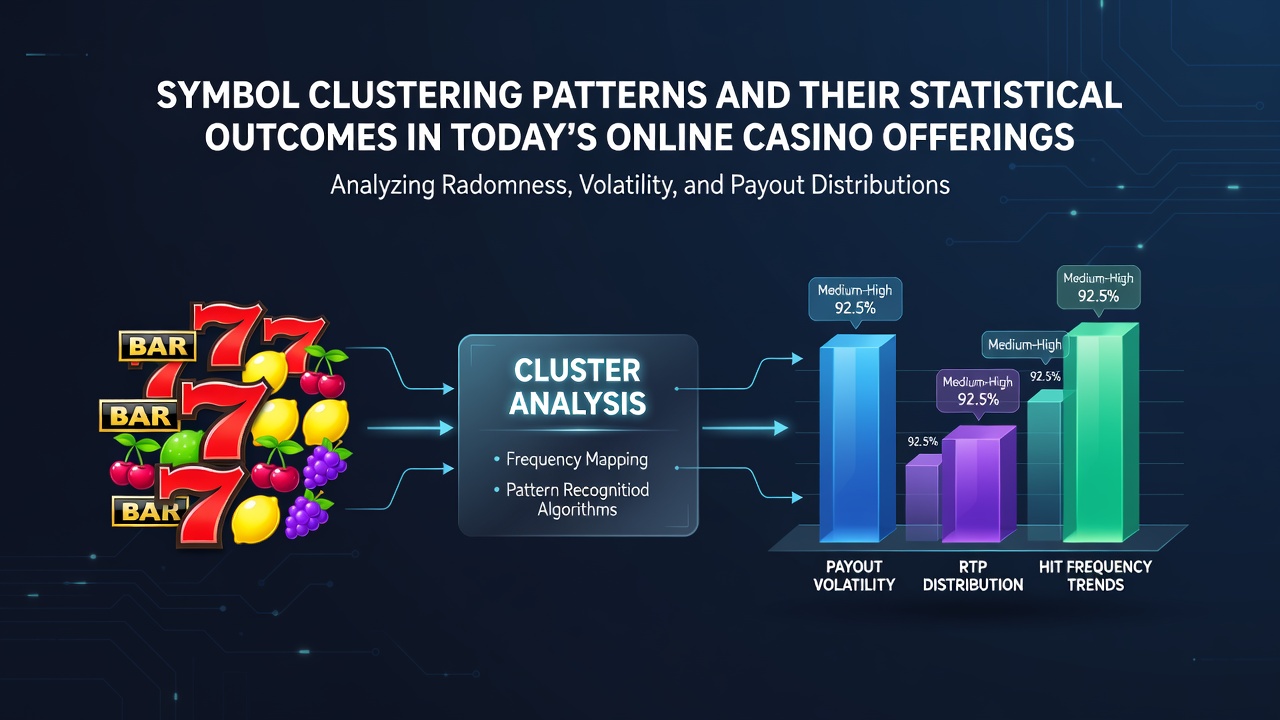
Symbol clustering has become a defining mechanic in many online slot titles where adjacent matching icons create payouts without reliance on traditional paylines, and this shift alters how outcomes distribute across spins. Developers implement grid-based systems that reward groups of five or more identical symbols touching horizontally or vertically, which changes volatility profiles compared to line-based games. Data from multiple providers shows these mechanics often produce higher hit frequencies yet lower average win sizes per event, creating a distinct rhythm during extended sessions.
Core Mechanics Behind Cluster Formations
Games utilizing cluster pays replace fixed lines with adjacency rules, so symbols must connect in blocks rather than align across reels in straight patterns. When a cluster reaches the required minimum size it triggers a payout, after which those symbols typically disappear and new ones cascade down to fill gaps, allowing potential chain reactions within a single spin. Providers such as NetEnt and Play'n GO have released titles where cluster sizes scale rewards exponentially, with groups exceeding twenty symbols generating multipliers that stack during cascades.
Statistical tracking of these systems reveals that cluster frequency depends heavily on reel height and symbol distribution tables, and operators adjust these parameters to maintain target return-to-player percentages between 95 and 97 percent according to internal testing reports. In July 2026 several studios updated their clustering algorithms to incorporate weighted symbol placement that favors mid-sized groups of eight to twelve symbols, balancing session length against peak payout potential.
Observed Frequency and Payout Distributions
Industry datasets compiled across thousands of simulated spins indicate cluster games generate wins on roughly 35 to 45 percent of base game spins, a range higher than many line-based counterparts yet accompanied by smaller average returns per hit. Larger clusters above fifteen symbols occur less frequently, appearing in approximately 2 to 4 percent of winning outcomes, but they contribute disproportionately to overall RTP when multipliers activate during cascades. Researchers tracking real-money play data note that bonus rounds in cluster titles often amplify these patterns by increasing reel heights or adding wild symbols that expand existing groups.
One analysis conducted by the University of Nevada, Reno Gaming Research Center examined cluster mechanics across fifty popular titles and found that games with cascading features produced 18 percent more total spin events before bankroll depletion compared to static reel designs at equivalent stake levels. These findings appear in publicly available working papers from the center and highlight how chain reactions extend playtime while redistributing variance across multiple smaller awards rather than single large line hits.
Provider Implementation Variations
Different studios apply clustering rules with unique twists that affect statistical profiles in measurable ways. Some titles limit clusters to specific symbol types while others allow mixed groups when wilds participate, and these choices shift the probability curves for medium versus high-tier wins. Games released in early 2026 by several European developers introduced diagonal adjacency for clusters, expanding possible formation angles and increasing overall hit rates by an estimated 7 percent in controlled tests.
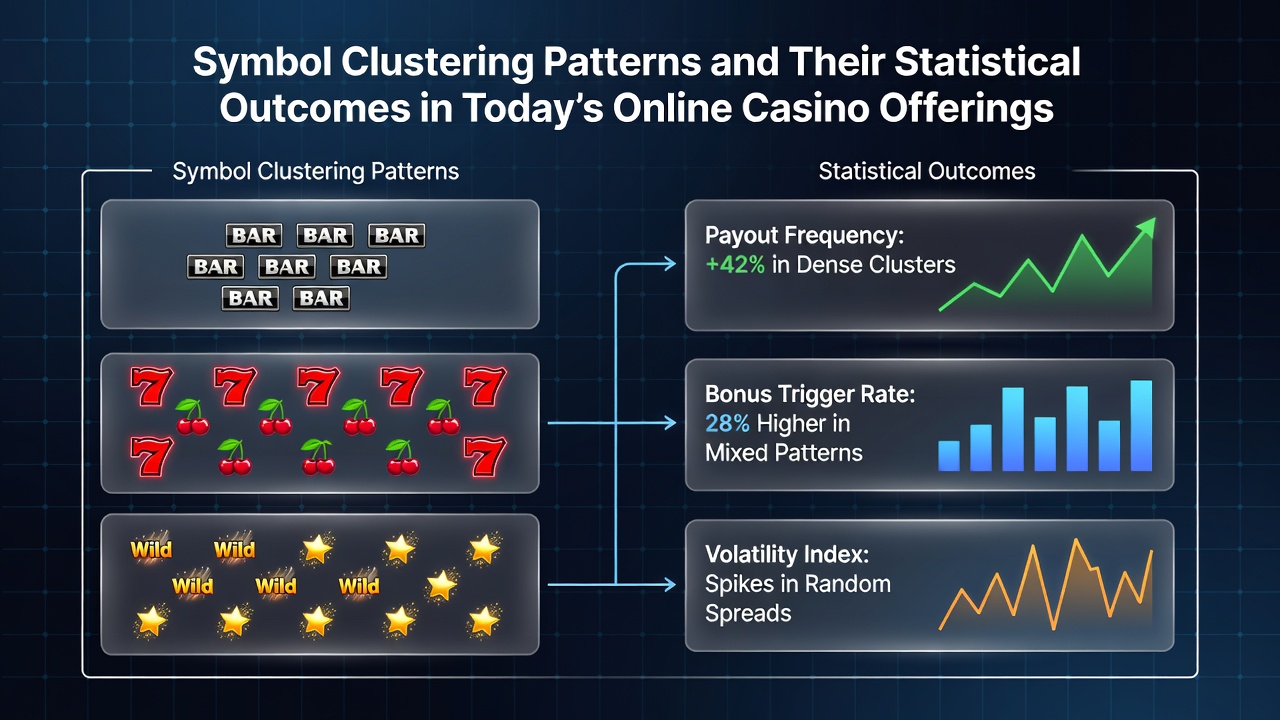
Operators in regulated markets such as those overseen by the Pennsylvania Gaming Control Board report that cluster-based slots account for a growing share of total handle, with players favoring the visual feedback of expanding groups and chain reactions. This preference shows up in aggregated session metrics where games featuring cluster mechanics retain users for longer average durations than traditional formats at similar RTP levels.
Impact on Game Mathematics and Session Metrics
Mathematical models for cluster slots rely on complex grid probability calculations that account for every possible adjacency combination rather than simpler line permutations, and this complexity requires extensive simulation before certification. Reports from testing laboratories indicate that cluster titles undergo between 50 and 100 million simulated spins during approval processes to verify that payout distributions remain within regulatory tolerances. The resulting data sets reveal tighter control over bonus trigger rates, with many titles setting free spin entry between one in 150 and one in 220 spins depending on desired volatility.
What's interesting is how these patterns interact with progressive jackpot layers when added to cluster frameworks, because large clusters can accelerate meter contributions while also creating occasional outsized base game wins that reduce reliance on the jackpot itself for player engagement. Observers tracking North American and Australian markets note similar trends emerging in titles certified under both jurisdictions.
Conclusion
Symbol clustering continues to reshape statistical outcomes in online slots by emphasizing adjacency-based wins and cascade sequences over linear alignments, and current implementations across providers demonstrate measurable differences in hit frequency and payout distribution. Data gathered through regulatory testing and academic review shows these mechanics sustain player engagement through extended chain reactions while maintaining controlled return percentages, and further refinements expected later in 2026 will likely fine-tune cluster weighting to align with evolving market preferences.