Franchise Crossovers: How Popular Entertainment Properties Shape Slot Game Themes and Mechanics
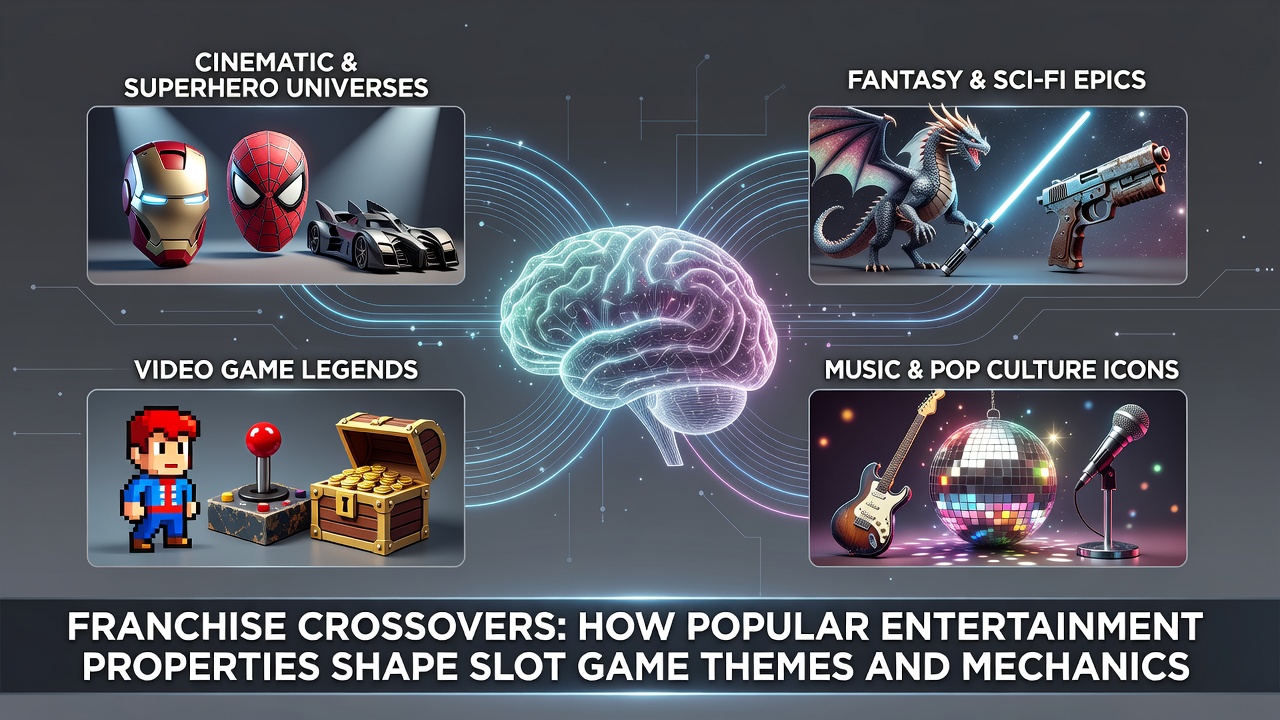
Franchise crossovers have become a defining feature of modern slot game development, where rights holders license characters, storylines, and visual assets from films, television series, and video games to create themed machines that integrate familiar narratives directly into reel layouts and bonus structures. Data from industry reports indicate that licensed titles accounted for a growing share of new releases through 2025, with developers aligning paytables, symbol hierarchies, and progression systems to match source material lore.
Early Licensing Partnerships and Market Expansion
Developers first experimented with licensed properties in the late 1990s and early 2000s, adapting movie franchises to physical cabinets before shifting focus to online platforms. Companies such as International Game Technology secured agreements with major studios, embedding movie clips and character voices into gameplay loops. These early machines established patterns still visible today, where scatter symbols trigger features that mirror key plot points and where progressive jackpots scale according to franchise milestones. Regulators in jurisdictions including Nevada and New Jersey tracked these introductions through licensing filings, confirming that consumer recognition translated into higher session lengths on licensed versus generic titles.
Theme Integration Across Reel Mechanics
Slot studios map franchise elements onto core mechanics by assigning high-value symbols to protagonists and antagonists, while lower symbols represent supporting cast or iconic objects. Bonus rounds often replicate set pieces from the original property, using collection meters or multi-stage pick features that advance a narrative arc. In titles based on long-running series, developers incorporate episodic structures so that players encounter different chapters across free-spin rounds, each round reflecting a distinct season or storyline segment. Observers note that this approach maintains engagement because symbol interactions remain consistent with established canon, reducing the learning curve for fans who already understand character relationships.
Mechanics Shaped by Narrative Logic
Mechanics evolve beyond simple reskins when designers embed franchise-specific rules into math models. A property centered on team-based competition might feature expanding wilds that represent alliance formations, whereas a horror franchise could introduce stacked symbols that build tension through incremental reveals. Volatility profiles frequently align with source tone: lighter entertainment properties receive lower-variance configurations that deliver frequent small wins, while darker narratives support higher variance with rarer but larger payouts. Reports compiled by the European Gaming and Betting Association show that these tailored models appear in markets across multiple continents, with operators adjusting configurations to local regulatory frameworks without altering the underlying theme logic.
July 2026 Release Patterns and Regional Adaptation
By July 2026 several new crossover titles reached operators in regulated markets outside the United Kingdom, including launches timed with streaming service anniversaries. Developers coordinated with rights holders to synchronize reel features with fresh content drops, ensuring symbols and animations reflected the latest canon updates. Australian regulatory filings documented similar patterns, where state gaming authorities reviewed artwork and feature descriptions prior to approval, confirming that mechanics remained within prescribed return-to-player ranges while preserving franchise authenticity. These coordinated releases demonstrate how licensing calendars now influence development pipelines on a global scale.
Player Recognition and Retention Data
Studies conducted by university-affiliated gaming research centers indicate that players familiar with source material spend more time exploring bonus pathways because they anticipate feature triggers based on narrative cues. Tracking data from operator platforms reveal that sessions on licensed machines exhibit higher completion rates for multi-stage bonuses compared with original intellectual property titles. This retention effect holds across demographic segments, though conversion to real-money play varies by jurisdiction according to age-verification and deposit-limit rules enforced by bodies such as the Alcohol and Gaming Commission of Ontario. The consistency of these patterns suggests that thematic familiarity functions as a structural driver rather than a mere marketing overlay.
Future Pipeline and Rights Management
Rights negotiations increasingly incorporate clauses that specify mechanical adaptations, allowing developers to prototype features that interact with upcoming franchise installments. Trade associations have begun publishing guidelines on intellectual property usage in digital gaming products, emphasizing transparency in how character likenesses appear within random number generator frameworks. As streaming platforms continue to expand libraries, observers expect additional cross-media agreements that link slot progression systems to viewer milestones, such as unlocking new reel modifiers after a certain number of episodes have aired. These arrangements illustrate the ongoing convergence between entertainment distribution and gambling product design.
Conclusion
Franchise crossovers continue to influence slot game architecture through deliberate alignment of themes, symbols, and bonus structures with established entertainment properties. Regulatory records, operator analytics, and licensing agreements document measurable impacts on release schedules, player behavior, and product differentiation across multiple markets. As new agreements form in 2026 and beyond, the integration of narrative logic into mechanical systems remains a central component of how developers translate popular culture into playable formats.