Investigating the Interplay Between Audio Design Elements and User Immersion in Digital Gambling Interfaces

Audio design plays a central role in digital gambling interfaces where sound effects, background tracks, and layered audio cues interact with visual components to shape user engagement. Researchers have examined these elements through controlled studies that measure physiological responses such as heart rate variability and skin conductance when participants interact with slot machines or table games that incorporate dynamic audio layers. Data from these investigations show that synchronized audio events tied to reel stops or card reveals correlate with increased time spent in sessions compared to silent or muted versions of the same interfaces.
Core Components of Audio in Gambling Platforms
Sound designers build layers that include ambient casino noise, thematic music loops, and immediate feedback tones for wins or near-misses. Each layer activates at specific trigger points within game mechanics, and studies indicate that variable volume scaling based on bet size or win multiplier produces measurable differences in reported presence scores. Those who have analyzed telemetry from major platforms note that adaptive music shifts during bonus rounds extend average play duration by measurable margins across large user samples.
Voiceovers add another dimension when characters deliver lines that match on-screen events, and evidence from interface testing reveals higher retention rates in titles that employ context-aware narration. Audio engineers adjust frequency ranges so that celebratory chimes occupy higher bands while tension-building drones sit lower, creating separation that prevents auditory fatigue during extended sessions.
Research Findings on Immersion Metrics
Academic teams have applied presence questionnaires and eye-tracking technology to quantify how audio influences attention allocation across gambling interfaces. Results demonstrate that directional audio cues guide visual focus toward active reels or betting zones more effectively than static soundscapes. One study revealed that participants exposed to spatial audio positioning reported stronger feelings of being inside the virtual environment than those using stereo panning alone.
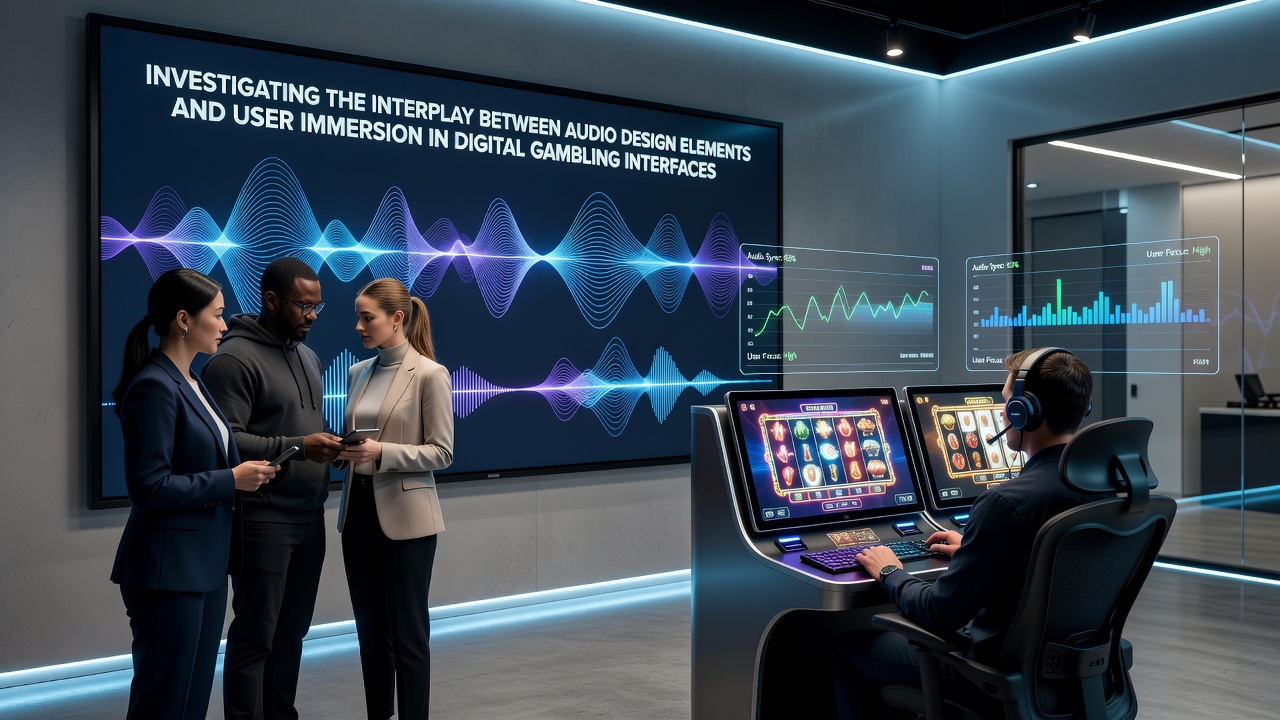
Physiological data collected during these experiments shows spikes in arousal markers aligned with win-associated audio bursts, and researchers have mapped these responses to specific decibel thresholds and harmonic structures. Observers note that consistent audio branding across multiple games from the same provider strengthens recognition and reduces the cognitive load required to enter an immersive state.
Technical Implementation Across Platforms
Modern gambling software integrates middleware tools that allow real-time audio parameter changes based on game state variables such as remaining credits or current multiplier. Developers test these systems across mobile and desktop environments to maintain consistent latency below thresholds that would break immersion. Figures from platform audits indicate that titles released with advanced audio engines achieve higher completion rates for tutorial sequences because sound cues reinforce on-screen instructions.
Cross-platform synchronization requires careful calibration of sample rates and compression settings so that mobile users experience comparable audio fidelity to desktop players. Industry reports from organizations tracking software standards highlight that titles adhering to unified audio frameworks encounter fewer user complaints about disjointed feedback during transitions between base game and feature rounds.
Regional Approaches and Data Trends
Regulatory environments outside the UK shape audio requirements differently, with Canadian provincial frameworks emphasizing responsible gaming prompts delivered through distinct audio signals that stand out from celebratory sounds. Australian research institutions have published findings on how culturally specific music motifs affect engagement levels among local player cohorts, and those datasets reveal measurable variations tied to familiarity with the sonic palette.
European gaming associations have compiled comparative analyses showing that interfaces employing adaptive audio report different session length distributions than those using fixed loops. These patterns hold across multiple operator datasets collected through 2025 and into 2026, providing operators with benchmarks for audio optimization projects.
Conclusion
The documented relationships between audio design choices and immersion indicators continue to guide development priorities in digital gambling interfaces. Ongoing data collection from live environments supplies fresh metrics that refine how sound layers integrate with mechanics and visuals. As platforms evolve, the evidence base around these interactions supports iterative improvements that maintain user attention while meeting operational standards across regions.